

Resilience Is a Muscle. And It’s Time We Keep Training It.
In a world of relentless disruption, geopolitical tremors, AI reshaping industries, and organizations in permanent flux, personal resilience isn’t a nice-to-have. It’s the most important skill none of us was ever formally taught.
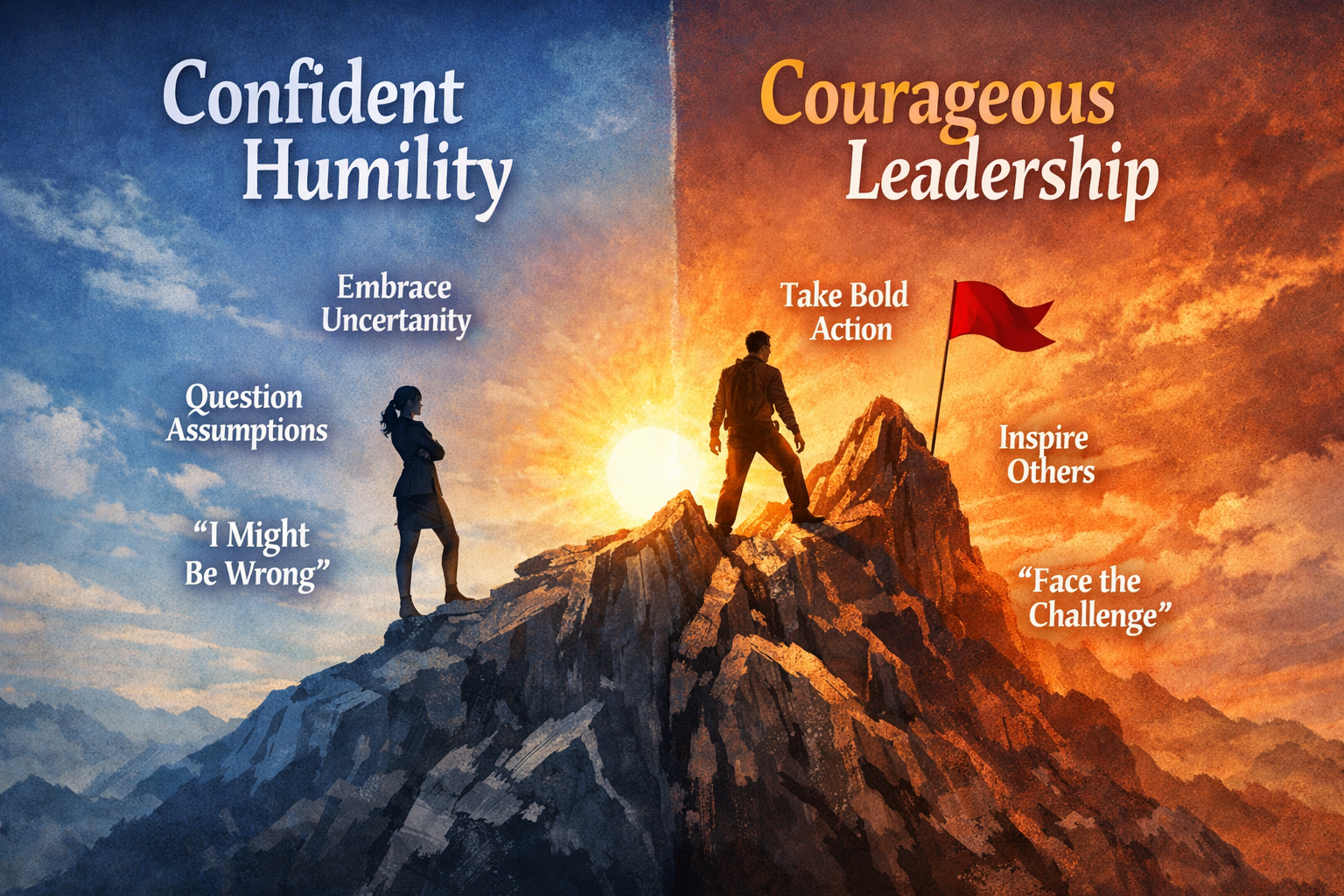
The Hardest Leadership Skill No One Talks About
Most leaders aren't brought down by failure. They're brought down by their own success.
When a formula works, we optimize it. Scale it. Worship it. Until the world shifts, and we're still defending the playbook that no longer applies.
The hardest leadership skill isn't vision, resilience, or decisiveness. It's something far more uncomfortable: the willingness to question what made you successful in the first place.
To gain better understanding for succeeding during uncertainty and volatility after massive success, the concept of confident humility, explains well why the leaders who thrive in uncertainty aren't those who know the most, but those most willing to reconsider what they know.
From a fatal Montana wildfire to the boardrooms of today, the pattern is the same: we don't fail because we stop learning. We fail because we can't stop being right.
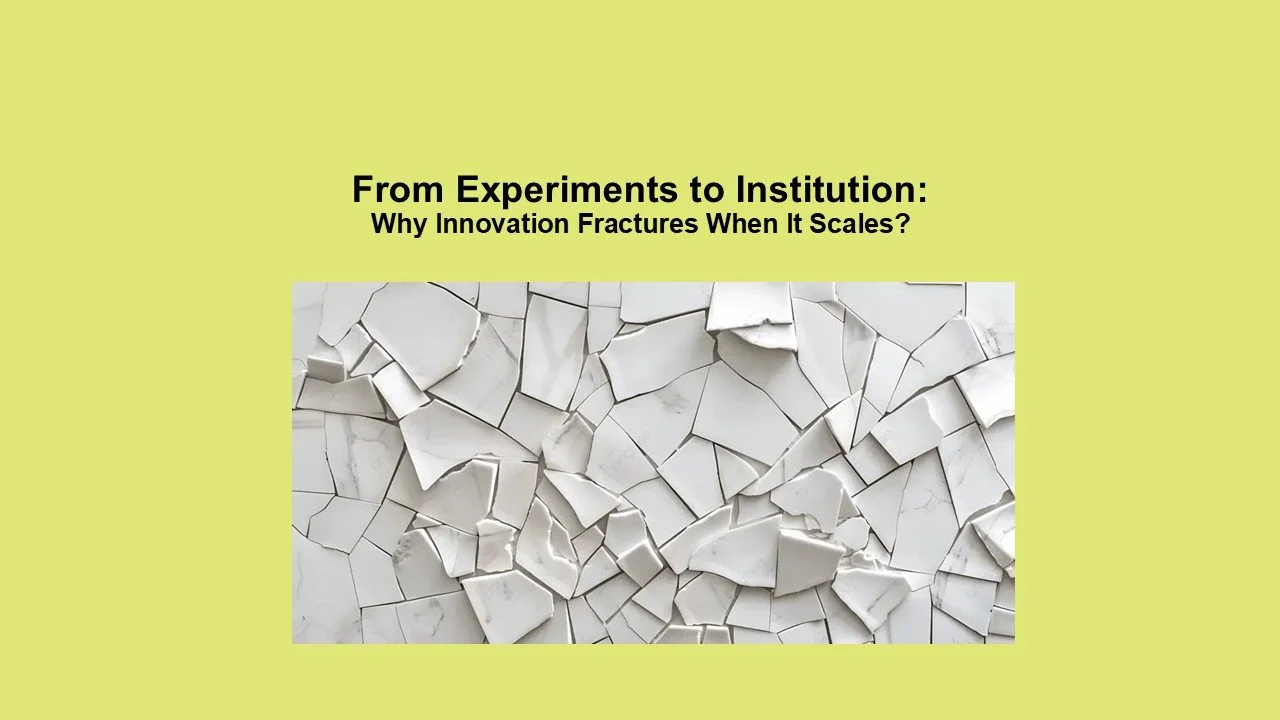
From Experiment to Institution: Why Innovation Fractures When It Scales
Most innovation doesn’t fail during the experiment. It fails after it succeeds. Once an experiment shows promising results, leadership gets excited, and scaling begins. However, six months later adoption is uneven, reporting skyrocket, and managers hesitate. What happened?
Experiments survive as they operate in protected space, when scaling is done it removes exactly the conditions that made experimenting successful.
Innovation rarely dies in the experimental phase. It dies in the institutionalization phase.
Why NGOs Struggle to Experiment: The Institutional Barriers Blocking Innovation
Constraints on NGO experimentation are not primarily technical or cultural. They are institutional. And until those institutions are redesigned to accommodate uncertainty, experimentation will continue to be talked about more than it is practiced.
Governments Aren’t Bad at Innovation. They’re Bad at Experimenting.
Can the public sector really innovate, or is it designed not to?
Based on my research on public sector innovation and experimental spaces, including immigrant integration experiments in Finland, I’ve come to see experimentation not as a luxury but as a necessity for modern government. In this blog post in the first comment, I reflect on lessons from Finland and similar approaches in Denmark, the UK, India, China, and South America, and why experimental spaces are becoming essential for governing complexity.
Innovation Dies in Silos: Spreading Experimental Intelligence Beyond the First 16 Weeks of Experimenting
You've done it. You've run your first experimental cycle,16 weeks of genuine learning that actually taught you something. Your team is energized. The insights are real. And now comes the question that will determine whether this was a flash in the pan or the beginning of something transformative:
How do you spread this capability without killing it through bureaucracy?
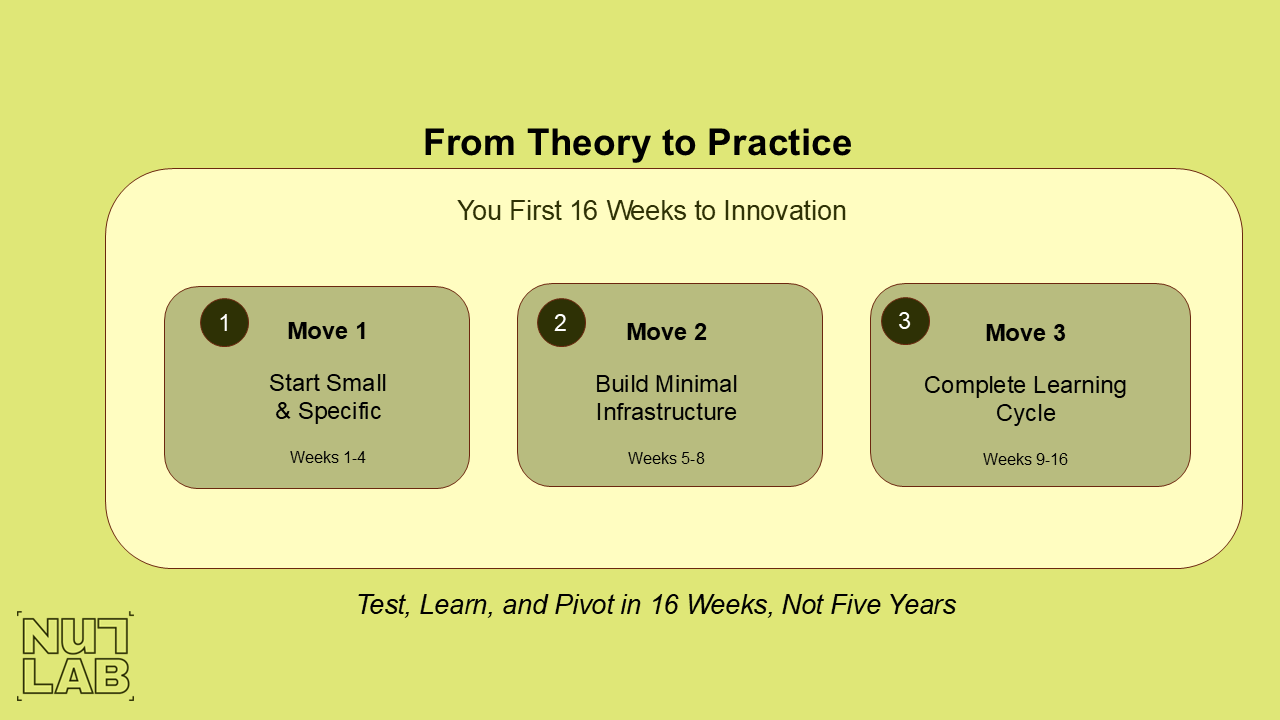
From Theory to Practice: Your 16-Week Roadmap to Innovation
You've read about experimental spaces. You understand why they matter. You've probably even convinced leadership that innovation is critical. Now comes the hard part: actually, making it happen.

Experimental Spaces: Your Organization's Secret Weapon for Innovation
In today's fast-paced business environment, large organizations face a fundamental tension: they need the stability to scale operations reliably, while maintaining the agility to innovate and adapt.