
The Hardest Leadership Skill No One Talks About
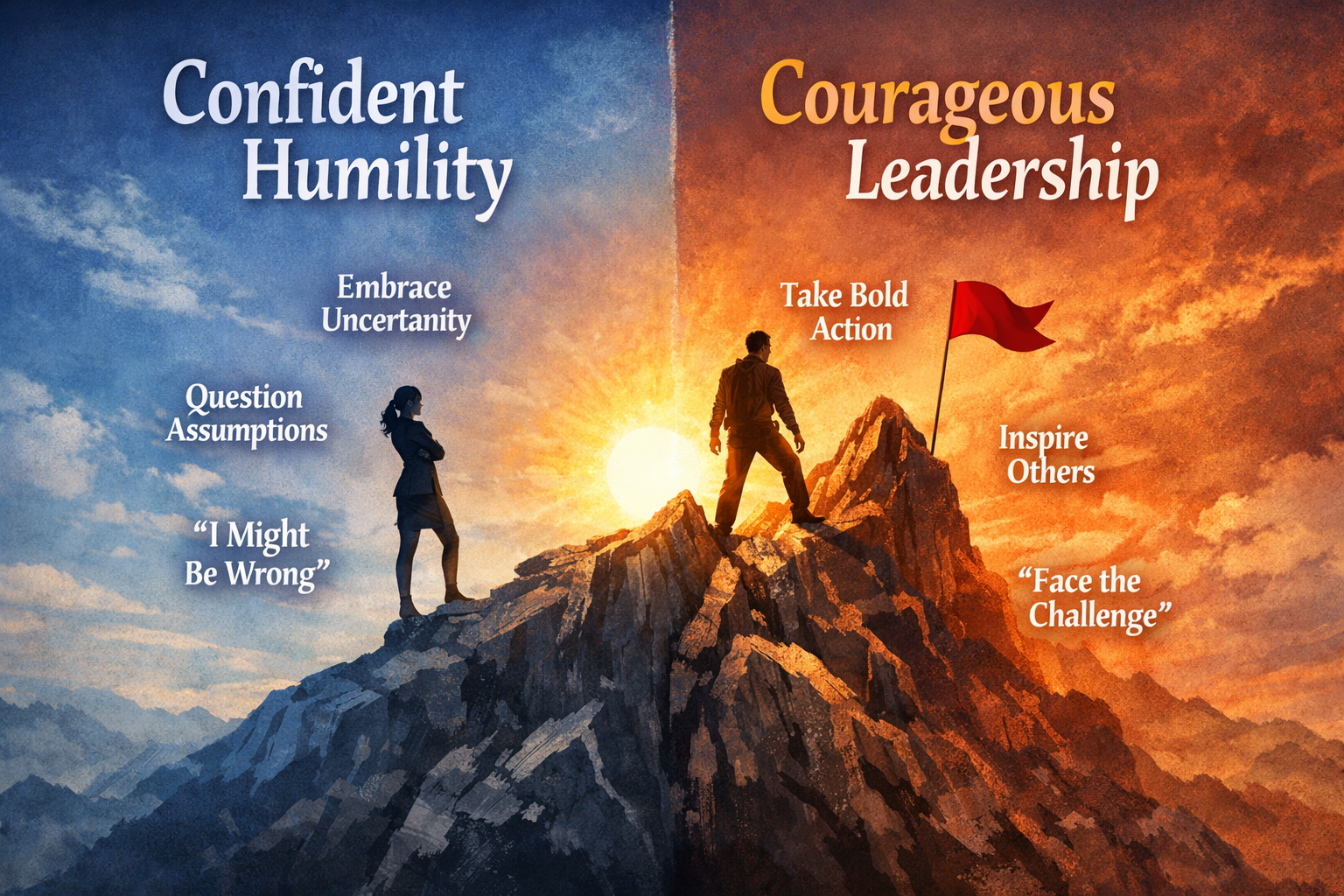
Image generated by ChatGPT
It's not vision. It's not resilience. It's the willingness to be wrong and to let go.
Most leaders don't fail because they stop learning. They fail because they can't stop being right. Here's a truth that doesn't get discussed enough in boardrooms or business schools: success is often the most dangerous thing that can happen to an organization. Not failure. Success.
A team finds a formula. It works. It scales. It gets optimized, systematized, and eventually, worshipped. What was once a smart decision quietly hardens into doctrine.
And that's precisely where the trap is set.
The Tyranny of What Worked
Prof. Karolin Frankenberger at the University of St. Gallen calls it dominant logic, the deeply embedded mental model of how your business creates value, what customers want, and what 'good' looks like.
These assumptions don't announce themselves. They don't sit in strategy decks. They live in the unquestioned habits of how decisions get made, how problems get framed, and what evidence gets taken seriously.
In a stable world, dominant logic is an asset. It drives efficiency. It enables scale. In a volatile world, it becomes a blind spot that leadership actively defends. When results start slipping, the reflex is to demand more data, assume it's a temporary dip, and wait for the market to "come back." The signals get questioned. The logic doesn't.
But sometimes the market isn't wrong. We are.
The Mann Gulch Lesson
In 1949, a team of smokejumpers parachuted into a Montana canyon to fight a wildfire. Within minutes, the fire shifted. It turned uphill, toward them, and began moving faster than a human could run. Their foreman, Wag Dodge, made a decision that defied everything they'd been trained to do. He struck a match and lit a fire in front of him. Then he lay down in the burned-out patch and called his crew to follow, and to let go of their heavy tools and gear.
Fight fire with fire. Survive by burning the ground beneath you.
Most of the crew kept running. They were carrying their tools, axes, saws, heavy equipment, the physical symbols of what it meant to be a firefighter. Dropping them felt like abandoning their identity. They couldn't let go.
They didn't lack skill. They lacked the ability to unlearn in real time.
Organizational theorist, in his seminal article, Karl Weick later analysed this tragedy as a “collapse of sensemaking”. When the familiar frameworks no longer fit a fast-changing reality, people don't adapt. They grip harder.
This dynamic plays out in organizations every single day. Less dramatically. But just as consequentially.
Confident Humility: The Mindset That Separates Good from Great
Adam Grant's book “Think Again” introduces a concept that should be required reading for every executive: the difference between thinking like a preacher, a prosecutor, or a politician, versus thinking like a scientist.
Preachers defend their beliefs. Prosecutors attack alternatives. Politicians seek validation. Scientists test hypotheses and update them when the evidence demands it.
The leaders who navigate uncertainty best operate from what Grant calls ‘confident humility’: a rare combination of conviction in their capabilities and genuine openness to being wrong about their assumptions.
This is not a weakness. It is perhaps the most sophisticated cognitive skill in leadership.
Certainty closes doors. Confident humility keeps them open.
Unlearning Is Not Forgetting, It's Making Room
Let's be clear: unlearning doesn't mean discarding experience or dismissing expertise. It means interrogating the assumptions buried underneath our decisions.
The most powerful questions aren't complex. They're uncomfortably simple:
What must still be true for our current strategy to keep working?
What if those conditions no longer exist?
If we were starting from scratch today, would we make the same choices?
These questions feel threatening because they are. Unlearning challenges competence ("What if I've been wrong?"), status ("What if my expertise no longer matters?"), and identity ("Who am I if this changes?"). And yet, the cost of not asking them is exponentially higher.
Strategies expire faster than ever. Competitive advantages erode overnight.
The greatest organizational risk today is not making the wrong move; it's staying committed to the right move for too long.
What This Looks Like in Practice
Organizations that build unlearning into their culture don't wait for a crisis to trigger a rethink. They build the discipline of questioning their own assumptions into the rhythm of leadership.
That means rewarding leaders who change their minds when evidence demands it, not penalizing them for inconsistency. It means creating forums where the dominant logic can be challenged without political risk. It means treating strategy reviews not as validation exercises but as genuine stress tests.
Most importantly, it means leaders who are willing to model the behaviour themselves. Who says publicly: "I was wrong. Here's what I've updated."
In a world that keeps shifting, the leaders who thrive are not those who know the most; they are those most willing to reconsider what they know.
The Real Question
We spend enormous energy developing leaders who are confident, decisive, and knowledgeable. All of it essential. But the question that will define leadership in the decade ahead is not whether you can learn something new.
It's whether you're willing to let go of what once made you successful.
That's the real test of leadership courage. Not in the moments of crisis, but in the quiet, uncomfortable space where your past success starts to feel like your greatest liability.
Confident humility is not a soft skill. It is a survival skill.
